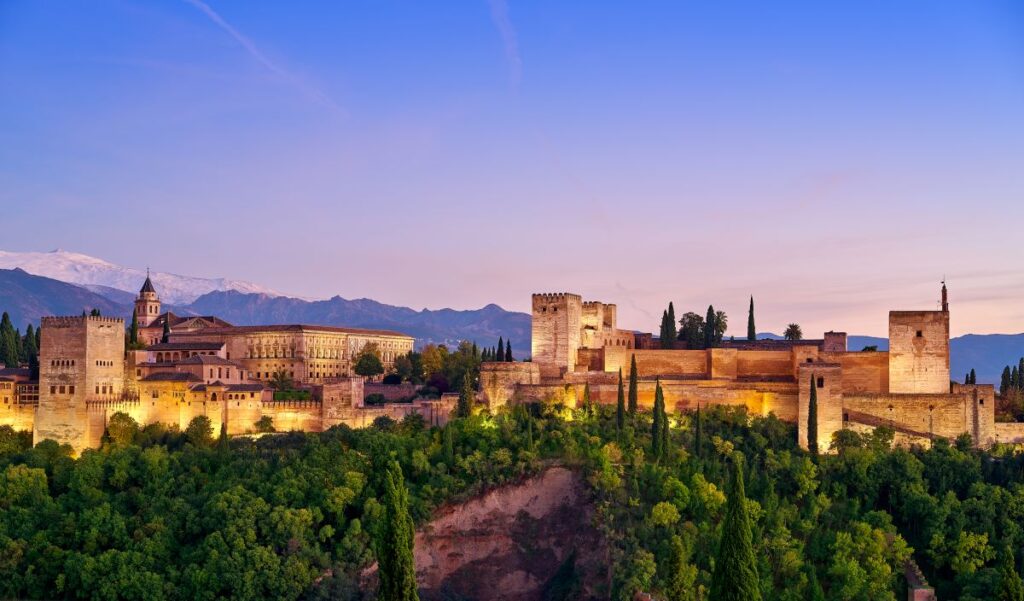
Granada has a way of making everything feel significant. The city sits between the Sierra Nevada and the fertile plain, shaped by eight centuries of Moorish rule and the poets and composers it has produced ever since. Ecem came here from Turkey and stayed - and her tour moves through the city the way someone who actually lives there does, starting with the literary south and climbing, gradually, toward the fortress on the hill.
The Park of Federico García Lorca opens the tour, a large green space in the south of the city where locals come to sit in the sun. Inside it stands Huerta de San Vicente, the summer house where Lorca spent the summers between 1926 and 1936 and wrote some of his most important works - Blood Wedding, Lament for Ignacio Sánchez Mejías - hiding away in what he called his “workshop,” listening to Bach, Mozart and flamenco on an old gramophone. The house is now a museum, the grand piano and sombre bedroom preserved exactly as they were. He was arrested near here in August 1936 and executed by Nationalist forces shortly after. He was 38. Plaza de la Trinidad is the square where locals and visitors meet without making much of a distinction between the two — café tables, students, the unhurried rhythm of a Granadan afternoon. The Cathedral of Granada nearby is a Renaissance building begun in 1523 on the site of the city’s main mosque, immediately after the Christian reconquest. Its unfinished tower was planned at 57 metres but completed with only three of the six intended floors due to foundation problems; the largest bell weighs over six tons. Beneath the cathedral, in the underground crypt, is buried Mariana Pineda - the 19th-century freedom fighter immortalised by Lorca in a play bearing her name.


Toward the Alhambra
Puerta Elvira is the Andalusian gate that marks the entrance to the old Arabic street, one of the oldest surviving parts of the city’s medieval layout. Plaza de Santa Ana is one of Granada’s most important squares, sitting at the point where the River Darro emerges from beneath the city and the Albaicín begins to climb the hill. The Paseo de los Tristes - the Promenade of the Sad - runs along the river with the Alhambra rising directly above it, its towers and fortifications visible through the trees. It’s called the Promenade of the Sad because it was the route funeral processions took out of the city. Today it’s lined with café terraces and considered one of the most beautiful walks in the world, which is very Granada.
Cuesta de Gomerez is the Moorish cobblestone street that climbs toward the Alhambra - the same path Lorca used to walk to wander in the woods and listen to the sound of water in the irrigation channels. The Gate of Pomegranates - Puerta de las Granadas - is the Renaissance gateway that marks the entrance to the Alhambra gardens, built by Charles V in 1536 and covered with carved pomegranates, the heraldic symbol of Granada. The name of the city itself comes from the Arabic “Karnattah,” though the pomegranate connection has made it permanent.
Carmen de los Mártires closes the tour as a secret garden that most visitors never find. Hidden on the slopes of the Alhambra hill just minutes from the main entrance, these seven hectares of landscaped gardens - fountains, ponds, peacocks, engraved poetry plaques, panoramic views of the city and the Sierra Nevada - are free to enter and almost always quiet. The gardens were built between 1858 and 1861 on a site that was previously a Moorish jousting ground, then a monastery. Lorca’s friend Manuel de Falla lived nearby, in a carmen he named Ave María. At golden hour, with the Alhambra visible through the trees and the city spread below, it’s one of the finest free views in Spain. Granada was featured on Tourizzy by Ecem, a local guide originally from Turkey, now living in Granada.