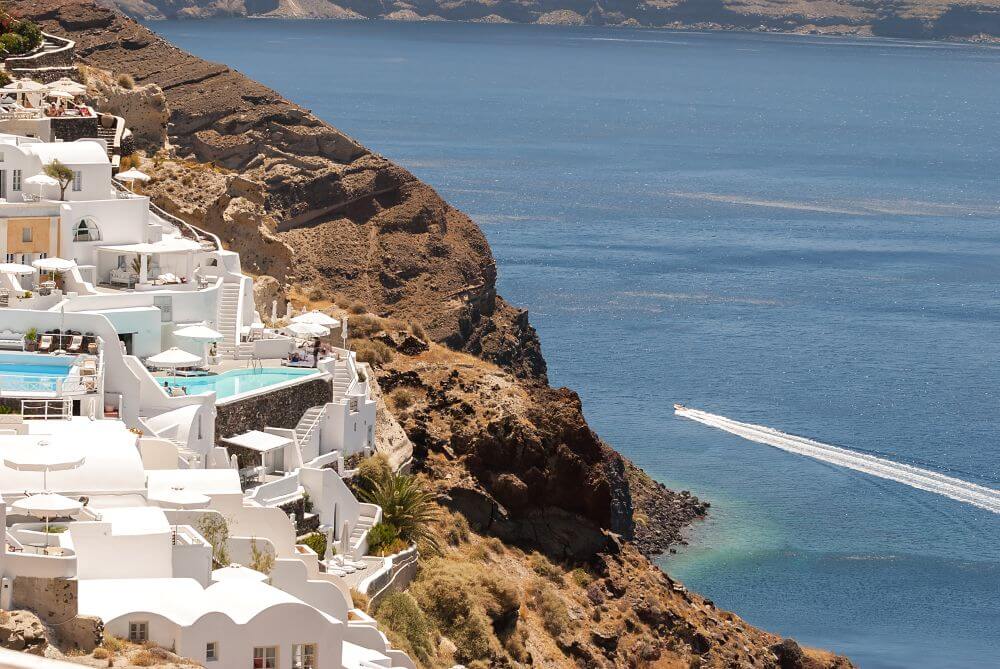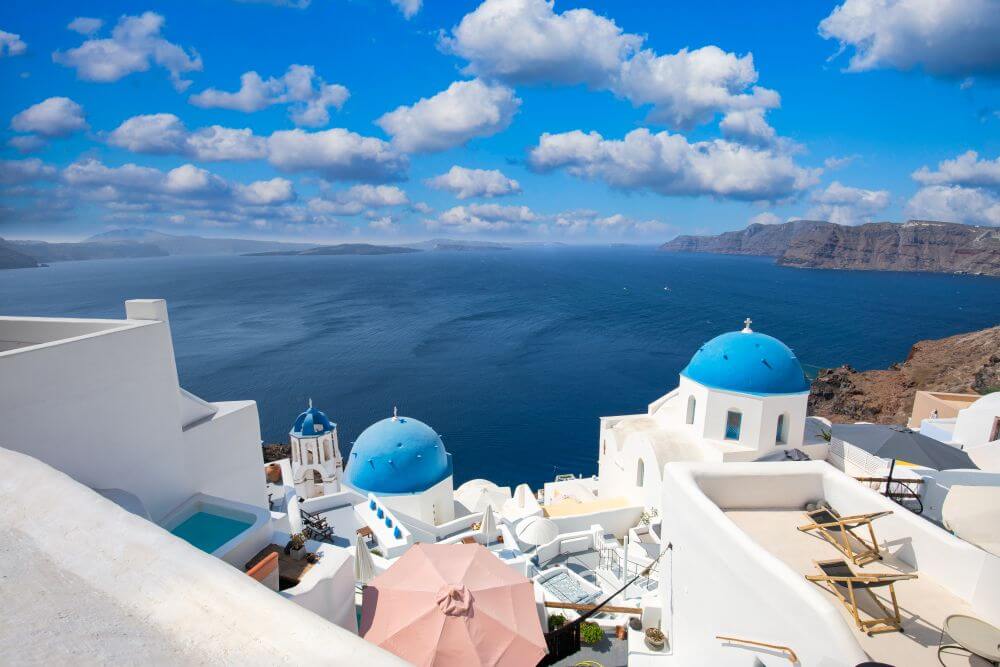
Oia is often experienced backwards. Most people arrive straight at the famous viewpoints, only then trying to make sense of the village that leads them there. This route reverses that logic completely.
Maria designed this walk as a way to understand how Oia actually works - not as a list of stops, but as a continuous flow of movement, pressure, and release.
You begin with an arrival that doesn’t feel like a landmark, but more like entering a system already in motion. Before anything else, you notice how quickly the village splits movement - how some people rush forward instinctively, while others slow down without really knowing why. Very quickly, you reach the first real decision point - what Maria calls the fork in the road. One direction pulls you into the main tourist stream, the other quietly redirects you into narrower, calmer paths. Nothing is signposted, but the difference in experience is immediate once you understand how Oia guides flow without ever announcing it.
Hidden Layers of the Village
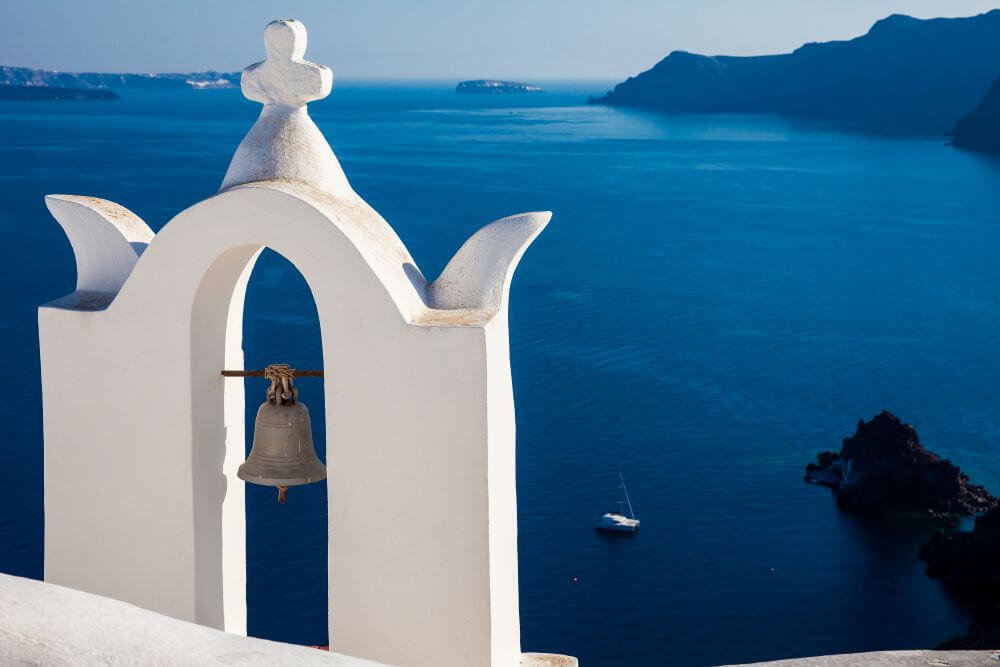
As you continue, the village starts to reveal its structure. The curved walls, tight passages, and layered architecture are not just aesthetic - they are responses to wind, density, and life on a cliffside. Everything here has a reason, even if it’s not obvious at first glance. Soon you pass through areas lined with old mansions, remnants of Oia’s social structure and maritime wealth. These buildings tell a quieter story of hierarchy and history, long before tourism defined the island.
Further along, small traces of the working past appear - corners once connected to boatbuilders and maritime activity, now absorbed into the village but still faintly visible if you know what you’re looking at.
The path gradually narrows as you approach the main flow of visitors. Movement becomes more concentrated, and you begin to feel the shift toward the central viewpoints. This is where timing and direction start to matter more than the destination itself. Then the landscape opens into the first caldera view - not yet the most famous spot, but the first moment where the scale of Santorini fully reveals itself. It’s a pause before the intensity of the main viewpoints begins. From here, you enter the main viewpoint area of Oia, where both sides of the cliff become visible. Maria’s approach here is simple: don’t just stop where the crowd stops. Understand how positioning changes everything - even in the most photographed place on the island.
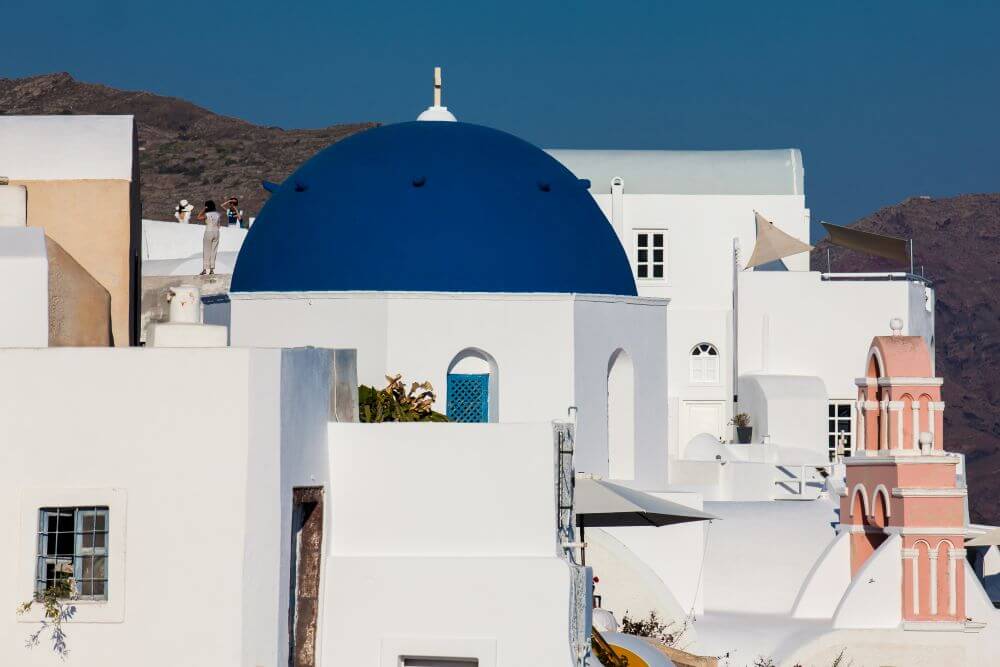
A little further on, you reach the blue domes. This is where most people arrive without context, but here timing completely changes the experience. A few minutes can mean the difference between chaos and clarity. The route then continues toward the Santorini Castle area, a historical point now surrounded by constant movement. Even here, there are ways to approach it without getting trapped in the bottlenecks that form throughout the day. Finally, the village softens again as you arrive at Platsiani Church Square - a quieter space that feels like a release after the intensity of the main path. It’s where Oia slows down again, just before you leave it behind. By the end of the walk, Oia is no longer just a sequence of viewpoints. It becomes something you can read- A system of movement, pressure, and direction. And once you see it that way, you don’t experience it the same again. Santorini’s Oia was featured on Tourizzy by travel guide Maria.