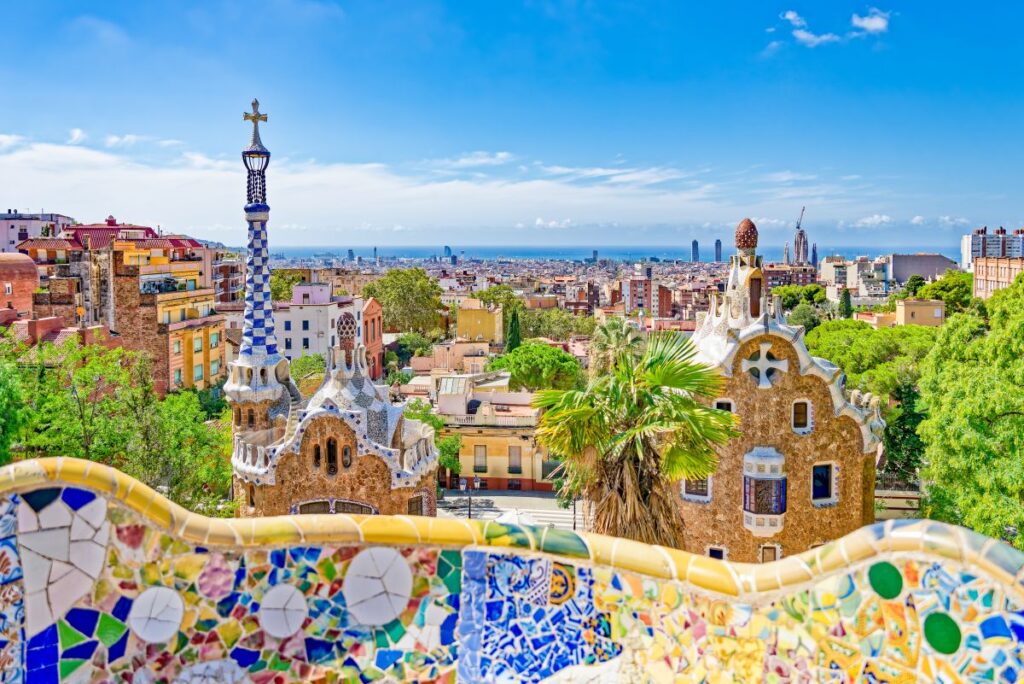
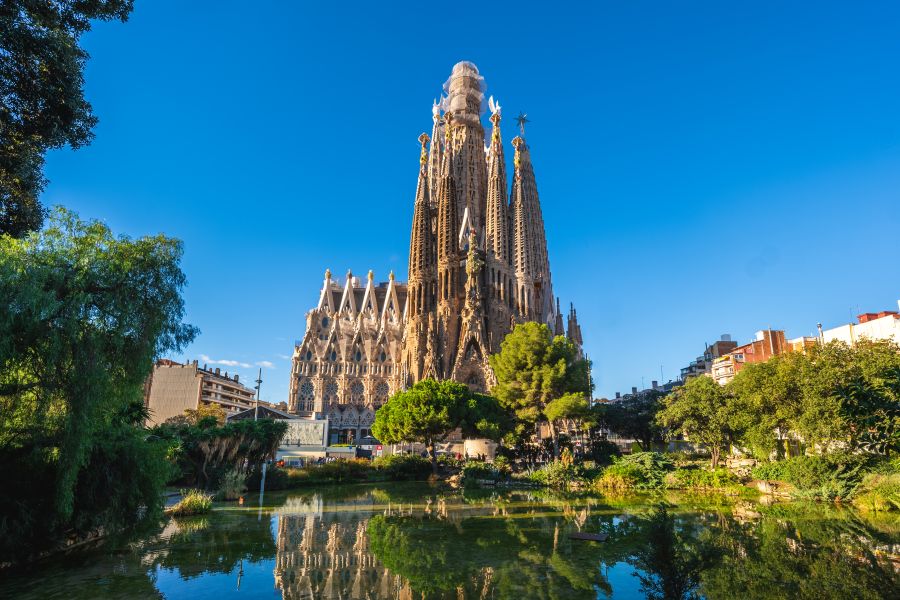
Barcelona has a tourist layer and then it has everything underneath. The Sagrada Família, La Rambla, the Gothic Quarter - all real, all worth seeing, all shared with several thousand other people at any given moment. Daniel arrived as an Italian-American and got lucky: his friends were mostly Catalan, which means they showed him the other version. This tour is that version - the viewpoints, the markets, the bars and the hidden squares that the city keeps for the people who actually live here.
It starts on a hill most tourists never find. Mirador del Turó del Putxet sits in the middle of the Gràcia neighbourhood, surrounded by pine trees, quiet enough on a weekday morning that you’ll hear dogs and birdsong before you hear any traffic. The view from the top takes in the full arc of the city from Tibidabo down to the sea. People from the neighbourhood come here to walk dogs, read, and do nothing in particular. It has the quality of somewhere that hasn’t been discovered, which in Barcelona in 2025 is increasingly rare.
Casa Vicens is a few minutes’ walk away and is one of the most important buildings in the city that people consistently overlook in favour of Gaudí’s more famous work. This was his first major commission, built in the 1880s for a tile manufacturer named Manuel Vicens i Montaner, right here in Gràcia. The obsession with colour, the tiles, the nature motifs worked into every surface - it’s all here, in the building where it began, and the intimacy of it makes the later works easier to understand. For years it was hidden behind a wall and known mostly to neighbours. Casa Sayrach, completed in 1918, is the other Modernist building on this tour that tends to stop people who stumble across it on Avinguda Diagonal - balconies and ceilings that curve like waves, all custom-made ironwork, and a rumour that the architect hid small hearts in the metalwork for his fiancée. Daniel sometimes sits on the benches outside. It’s that kind of building.
Where the City Lives
Llibreria Ona is a bookshop where everything is in Catalan - literature, art, design, history - and the calm inside it is not just the calm of a quiet shop but the calm of somewhere that knows exactly what it stands for. The pride Catalans have in their language and culture is something visitors often sense but don’t fully grasp until they’re in a place like this, where it’s not performed but simply present. Plaça de Sant Felip Neri in the Gothic Quarter looks peaceful at first - a small fountain, an old church, cats on the steps, children after school. Then you notice the marks on the walls: bullet holes and shrapnel scars from bombs dropped here in January 1938, killing 42 people, most of them children who had come up from a shelter at the wrong moment. Once you know, you can’t unknow it, and the square becomes something else.
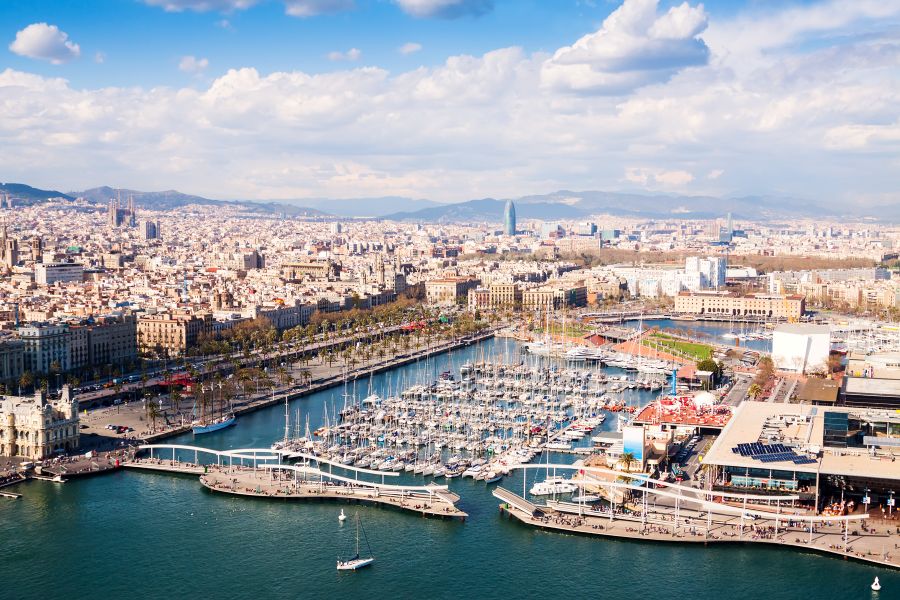
Montjuïc brings the tour up onto the hill that overlooks the port. Salts Bar sits near the Olympic diving pool - a low-key terrace bar with views over the city where locals come for a drink before heading further up the hill, and where Dua Lipa apparently filmed part of a music video, which has done nothing to change the atmosphere. The Teatre Grec is an open-air theatre carved into the hillside for the 1929 International Exposition, quiet during the day and host to the annual Grec Festival of music, theatre and dance in summer. The gardens behind the theatre are the final stop, and the best one: cypress trees, a small hedge maze, paths that lead to a sunset viewpoint that most people on Montjuïc never find. The last time Daniel was here, there was a couple on a bench, each reading their own book, watching the light change over the city. That’s the Barcelona this tour is looking for. Barcelona was featured on Tourizzy by Daniel, a local originally from the United States, based in Barcelona.
Benita’s tip - use the Tube and the DLR, trust the transport network, and don’t try to walk everything. London rewards the people who move through it efficiently and save their energy for standing still in the right places. London was featured on Tourizzy by Benita, a traveller from London.