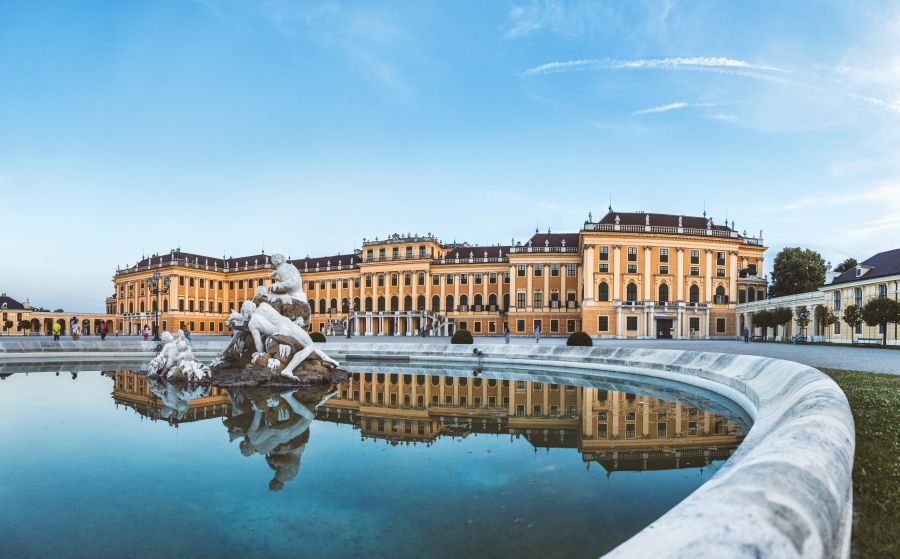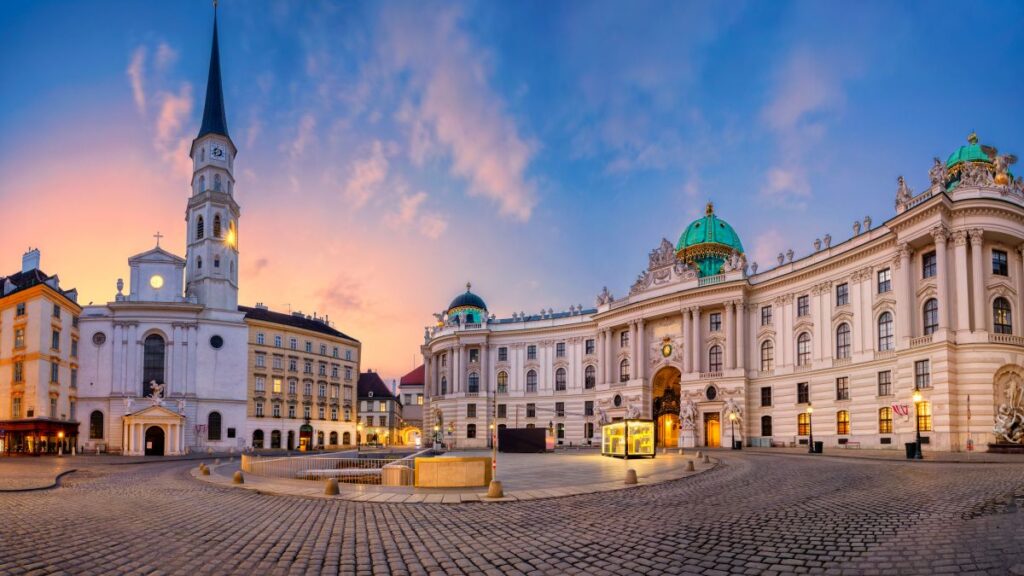
Vienna does not do things by half. The imperial palaces are enormous, the opera house is world-famous, the coffee houses have been serving Kaiserschmarrn since the Habsburgs were in charge, and the museums could occupy a week without repeating. But Theres, who has been living here for 14 years after growing up in the Austrian countryside and now organises Latin dance events across the city, built a tour that does something most Vienna guides don’t - it shows you the imperial city and then takes you dancing in it. The combination, as it turns out, makes perfect sense.
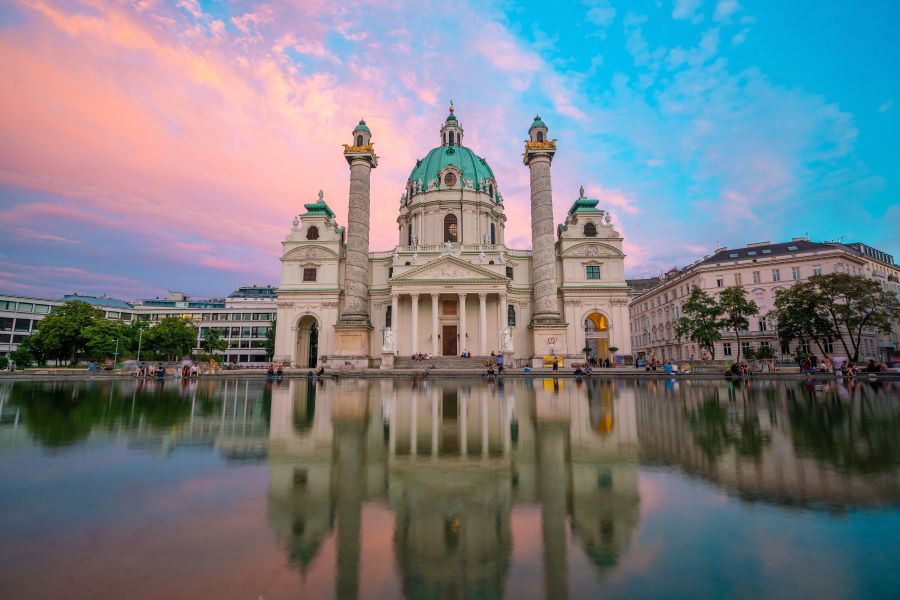
The tour opens at the Belvedere, an 18th-century royal palace complex on the southern edge of the centre with formal gardens, an art museum housing Klimt’s The Kiss among its highlights, and a botanical garden next door. It’s one of the finest baroque palace ensembles in Europe and the kind of place that sets an immediate standard for the day ahead. The Karlskirche - the Church of St. Charles - is next, a magnificent early 18th-century church with twin triumphal columns modelled on Trajan’s Column in Rome, sitting beside the Resselpark where the Soviet War Memorial stands as a quieter, more unsettling counterpoint to all the imperial grandeur nearby. The memorial, built in 1945 to commemorate Soviet soldiers who died liberating Vienna, is one of those monuments that sits in the middle of a city without quite being absorbed into it.
The Vienna State Opera needs no introduction. One of the most important opera houses in the world, its programme of opera and ballet runs almost every night of the year and the building itself , neo-Renaissance, 1869, rebuilt after bomb damage in 1955 - is worth seeing from outside even if you’re not attending a performance. Just beside it, the Otto Wagner Pavilion at Karlsplatz is a very different architectural statement: a Jugendstil Metro station designed by Otto Wagner in 1898, now operating as Club U, one of Vienna’s most distinctive nightlife venues. The contrast between the two buildings, 30 years and an entire aesthetic revolution apart, tells you something about how quickly Vienna was changing at the turn of the 20th century.
Shopping, food, art, festivals and all colours of Vienna
Santa Maria Maggiore is one of the stops Sofia includes that most guides skip - an early Christian church with mosaics that are less showy than San Vitale but reward closer looking, with geometric patterns and religious symbols that tell you as much about this period as the grander buildings nearby. The Chiesa di San Domenico stands beside the Mercato Coperto, the covered market where Ravenna shops for fresh produce, local piadina and cappelletti. It’s the kind of market that hasn’t been designed for tourists, which is precisely why it’s worth going to.
Kärntner Strasse is the main shopping street running from the opera to the cathedral, lined with restaurants, cafés, souvenir shops and bars. It’s busy and central and very Viennese in its combination of high-end and everyday. On this street you’ll also find Danzón, Vienna’s only Latin nightclub - the place where Theres’ two worlds genuinely intersect. Stephansdom, St. Stephen’s Cathedral, stands at the end of Kärntner Strasse and has been the landmark of Vienna since the 12th century. Its Gothic south tower reaches 136 metres and the patterned tile roof - 230,000 glazed tiles forming the imperial double-headed eagle - is best seen from above. Demel, nearby on the Kohlmarkt, is where the Viennese go for Kaiserschmarrn - the fluffy shredded pancake with powdered sugar and plum jam that the Emperor Franz Joseph I reportedly ate every day. Aida is the local chain café institution: pink interior, affordable prices, excellent cake, and absolutely no attempt to be fashionable about any of it.
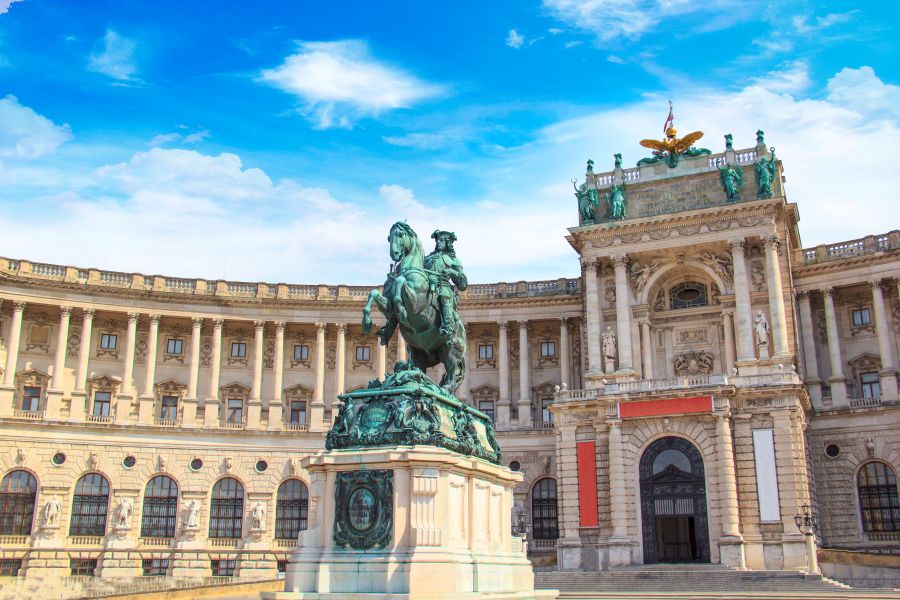
The route to the Hofburg the Imperial Palace - passes through the Graben, the grand pedestrianised square at the heart of the First District, and past the Plague Column, built in 1693 to mark the end of the bubonic plague that killed over 75,000 people in Vienna. Cabaret Fledermaus is on this route too, a historic nightclub in the First District designed by Josef Hoffmann in 1907 with an interior that is a complete work of Wiener Werkstätte art - it has operated as a cabaret, a cinema and a bar at various points in its history and remains one of the more interesting rooms in Vienna to have a drink in.
The Hofburg itself is vast. It served as the Habsburg imperial residence for over six centuries and the complex includes the Sisi Museum, the Spanish Riding School, the Imperial Treasury and the Imperial Apartments, among much else. Heldenplatz - Heroes’ Square - is part of the same complex, a monumental open space flanked by two equestrian statues and bounded by the curved wings of the New Palace. The Volksgarten is directly across the square, a formal public park with rose gardens and a temple to Theseus, and beside it the Volksgarten Pavillon and the Volksgarten nightclub, two of the city’s well- known outdoor and indoor club spaces. The Ringstrasse boulevard continues past the City Hall - a neo-Gothic building in front of which the city stages festivals, ice rinks and outdoor cinemas throughout the year — and the Parliament building, a neo-Greek structure currently offering free guided tours that are worth booking in advance. Maria-Theresien-Platz is the square that puts the Kunsthistorisches Museum and the Naturhistorisches Museum face to face across a formal garden with a statue of Empress Maria Theresia at its centre. Both are among the finest museums in Europe. The Museumsquartier behind them is where the 20th century begins: contemporary art museums, restaurants, and in summer a rooftop terrace with views across the city. Mariahilfer Strasse, Vienna’s most important shopping street, runs away from here into the residential districts beyond.
The evening belongs to Theres. Bojito Bar and Pisco Latin Bar are both in the First District and both do exactly what their names suggest – cocktails, Latin music, the particular energy of a city that dances in several languages at once. Vienna has a Latin scene that most visitors never find and that locals protect with something approaching affection. This tour finds it for you.
Vienna was featured on Tourizzy by Theres, a local tour guide and Latin dance event organiser based in Vienna.