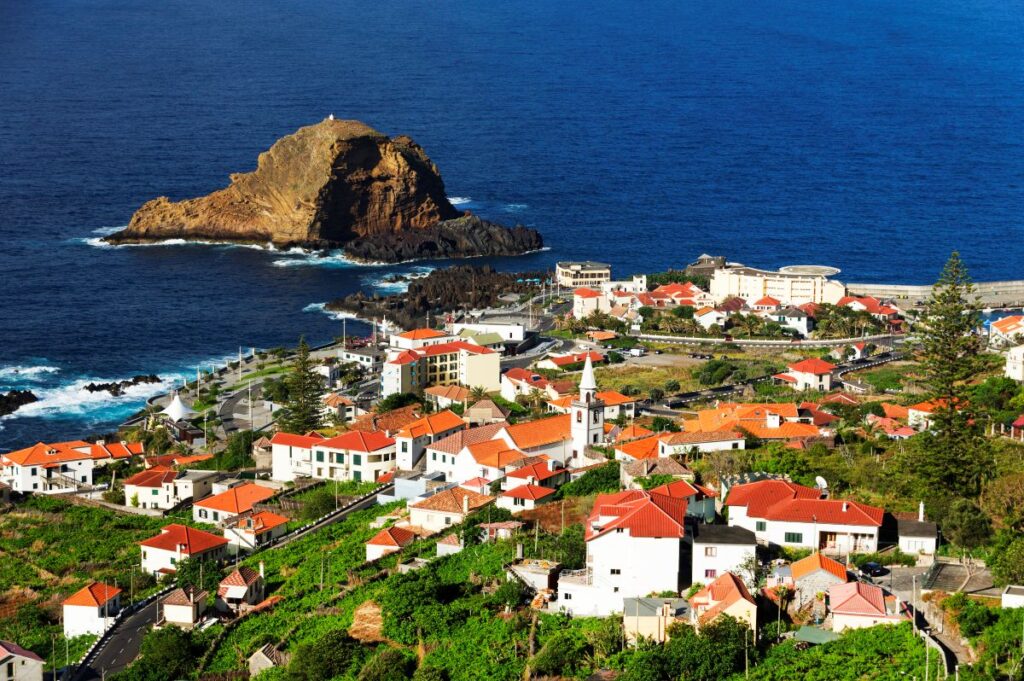
Madeira is one of those places people visit once and then spend years trying to get back to. Julia arrived from Estonia about a year ago, fell for the island immediately - the nature, the colours, the pace - and has been documenting it ever since. Her tour of Funchal is built around the spots she actually goes to, the kind of walking route that gives you the city’s character rather than just its highlights.
It starts in Santa Catarina Park, a peaceful green space in the centre of Funchal with ocean and mountain views in both directions, flowers everywhere and a fountain that birds seem to have claimed as their own. A statue of Christopher Columbus stands here - he lived on Madeira for a period before his 1492 voyage and married the daughter of the island’s first governor, so his connection to the place is genuine rather than decorative. The Municipal Garden is a short walk away, smaller and more intimate, tropical plants and shade and the kind of calm that city gardens produce when they’re well loved.
Funchal Cathedral is one of the oldest buildings on the island, founded in 1514. The exterior is deliberately plain - white-washed walls, simple lines - in the Manueline style of early Portuguese colonial architecture. Inside, the contrast is complete: hand-carved Moorish-influenced wooden ceiling, old stone, detailed altarpieces. The Cathedral Square nearby has the black-and-white Portuguese cobblestone pavement that turns up in every town in the country but looks particularly good here, with a small fountain and historical buildings on every side.
Old Town and the Ocean
One of Funchal’s oldest family-run Madeira wine cellars sits in a building that has been doing this for generations - wooden barrels, the particular dark sweetness of wine ageing in a warm cellar, tastings and bottles available at the end. Madeira wine is genuinely one of the great fortified wines, and it’s worth understanding it in the place where it’s made rather than in a restaurant somewhere else. Nata 7 is the café stop: fresh pastéis de nata, good coffee, reasonable prices, the kind of local spot that is busy for exactly the right reasons.
The Art of Open Doors is one of Funchal’s most visited streets now, but for good reason - local artists transformed the painted doorways of this old neighbourhood into an open-air gallery, each door a different design or story, the surrounding streets full of small cafés and restaurants that have grown up around it. It’s the kind of street art project that works because it fits the place it’s in rather than imposing on it.
Socorro Viewpoint is the quiet stop: a small terrace with benches, flowers, and a view of the ocean and coastline with the sound of the waves below. The Fortress of São Tiago is visible from here - a bright yellow fort built around 400 years ago at the water’s edge to protect Funchal from the pirate raids that were a constant threat to Atlantic island settlements. It still stands in excellent condition, and the contrast between the yellow walls and the blue Atlantic behind it makes it one of the most photographed things in Funchal.
The Promenade runs along the waterfront connecting the old town to the marina - palm trees, café terraces, harbour views, and the rhythm of a city that knows it lives next to the ocean and makes the most of it. The tour ends at the Museu CR7, dedicated to Madeira’s most famous export, Cristiano Ronaldo, with a bronze statue outside and his full trophy collection inside. Whatever your feelings about football, the museum sits right on the marina and the walk along the waterfront to get there is the best possible closing stretch. Funchal was featured on Tourizzy by Julia, a creator originally from Estonia, now living in Madeira.