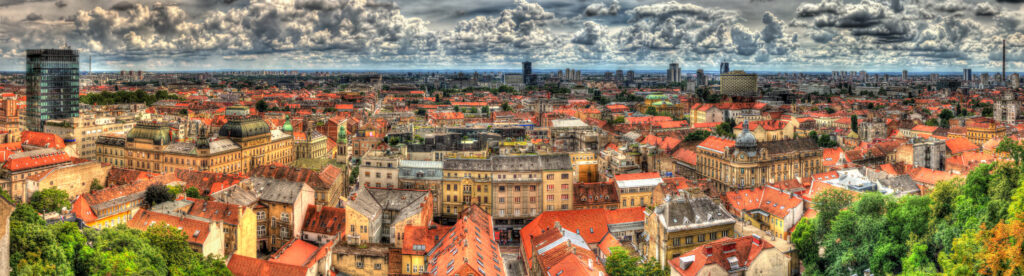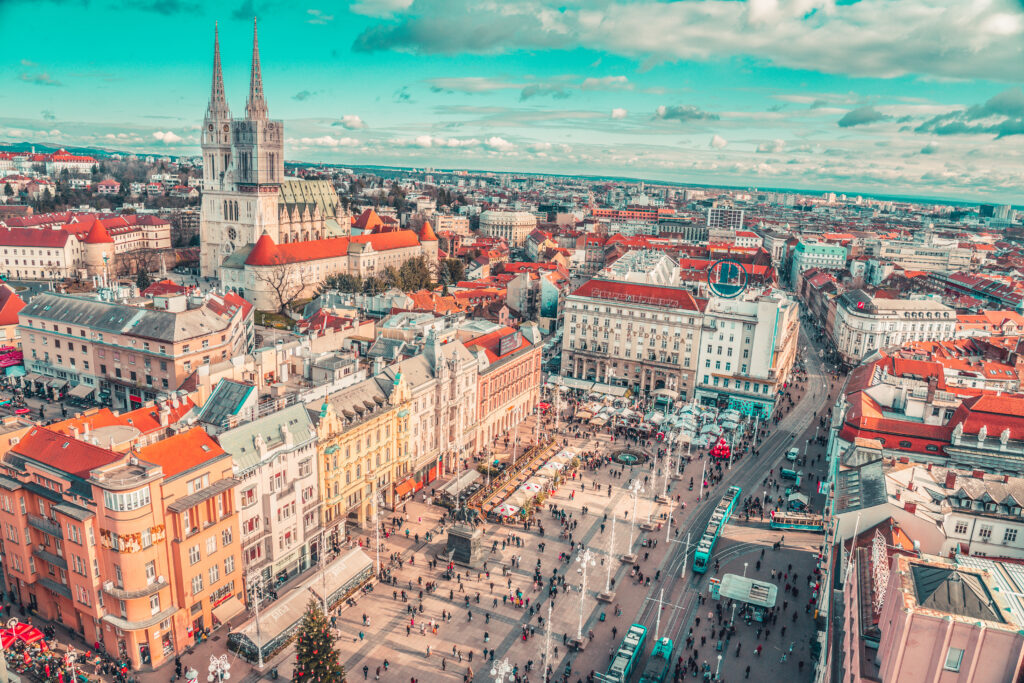
Zagreb has spent years being the city people fly through on the way to the Dalmatian coast. That’s changing, slowly, as more people stop for a day or two and discover that the Croatian capital has a character entirely its own - a Central European city with Austro-Hungarian bones, a café culture that runs from morning to midnight, and a green, walkable lower town that makes the whole thing very easy to enjoy. This self-guided tour was created in collaboration with local licensed guide Kristina, who knows the stories behind the streets.
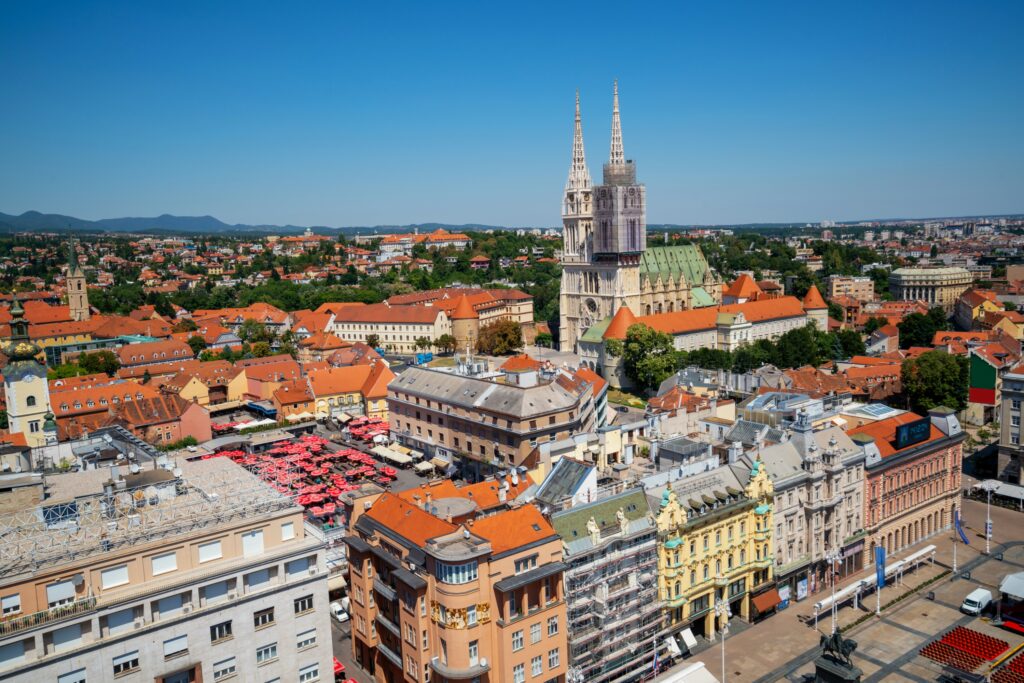
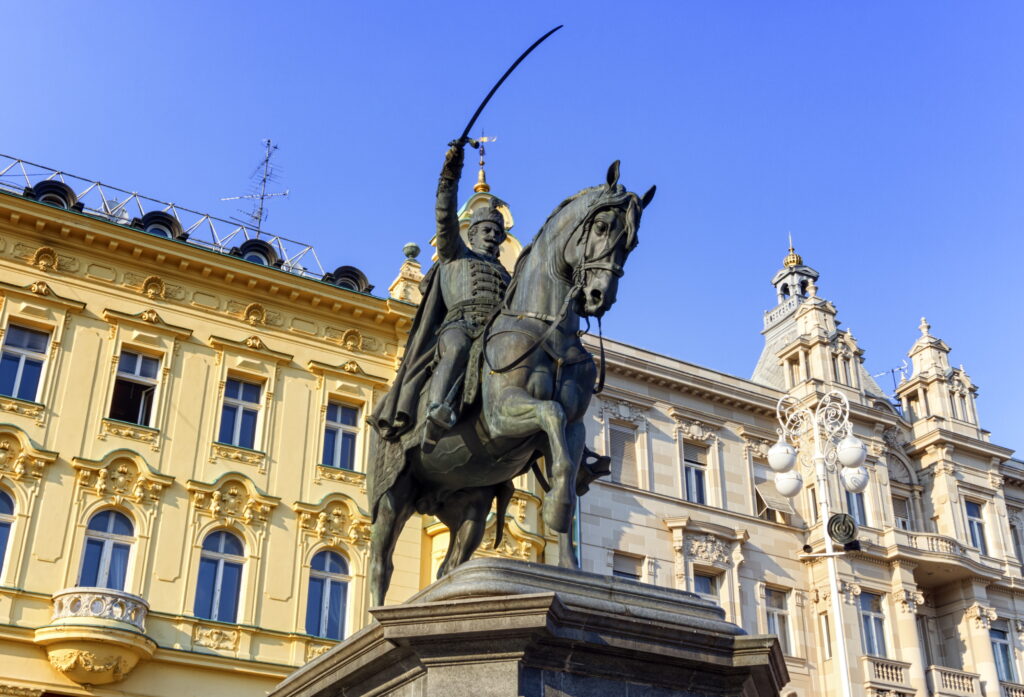
The tour begins at the Main Square - Trg bana Josipa Jelačića - the absolute centre of Zagreb’s daily life, dominated by the equestrian statue of Ban Jelačić and framed by elegant 19th-century buildings on every side. Trams converge here, people meet here, and the whole rhythm of the city passes through this square at some point during the day. The Oktagon, just off the square, is one of Zagreb’s most beautiful interior spaces — a 19th-century passage covered by a glass dome, with shops and a café below and the particular hushed atmosphere of a covered arcade that has been doing its job since 1898. Step inside even if you’re not shopping.
Cvjetni Trg - the Flower Square - is the next pause, a small square that has been selling flowers since the 19th century and is flanked by the kind of café terraces that fill up fast on a good afternoon. In spring it lives up to its name completely.
The Green Spine
From here the tour turns south into what Zagrebians call the Green Horseshoe - a series of parks and squares laid out in the late 19th century as a single connected green belt through the lower town. Zrinjevac is the first and arguably the finest: a long formal park with tree-lined paths, a bandstand that still hosts summer concerts, a meteorological column from 1884, and the kind of benches under old plane trees that invite a longer stop than you planned. It’s where Zagreb comes to walk slowly and does it well.
Tomislav Square continues the horseshoe, framed at the top by the main railway station - a monumental 1892 building that still announces arrivals to the city with appropriate grandeur - and a large equestrian statue of King Tomislav, Croatia’s first medieval king, looking back up the park toward the city centre. On a clear day, looking north from the square you can see the towers of Zagreb Cathedral rising above the roofline of the upper town in the distance.
The Botanički Vrt - the Botanical Garden - closes the horseshoe at the southern end, a 5-hectare garden established in 1889 by the Faculty of Science, with greenhouses full of exotic plants, formal flower beds and the kind of quiet that botanical gardens generate so reliably that it feels designed in rather than accidental.
The tour ends at the HNK - the Croatian National Theatre, a neo-baroque building completed in 1895, inaugurated by Emperor Franz Joseph I himself, and still operating as one of the leading cultural institutions in the country. The building stands in its own square at the western edge of the green horseshoe, and even if you’re not attending a performance, the exterior is worth a stop - it’s one of the finest examples of historicist architecture in Croatia and the kind of building that makes you wish more cities still built things like this. Zagreb rewards the people who slow down and walk it properly. Kristina’s tour is built for exactly that. Zagreb was featured on Tourizzy in collaboration with Kristina, a local licensed guide from Zagreb.